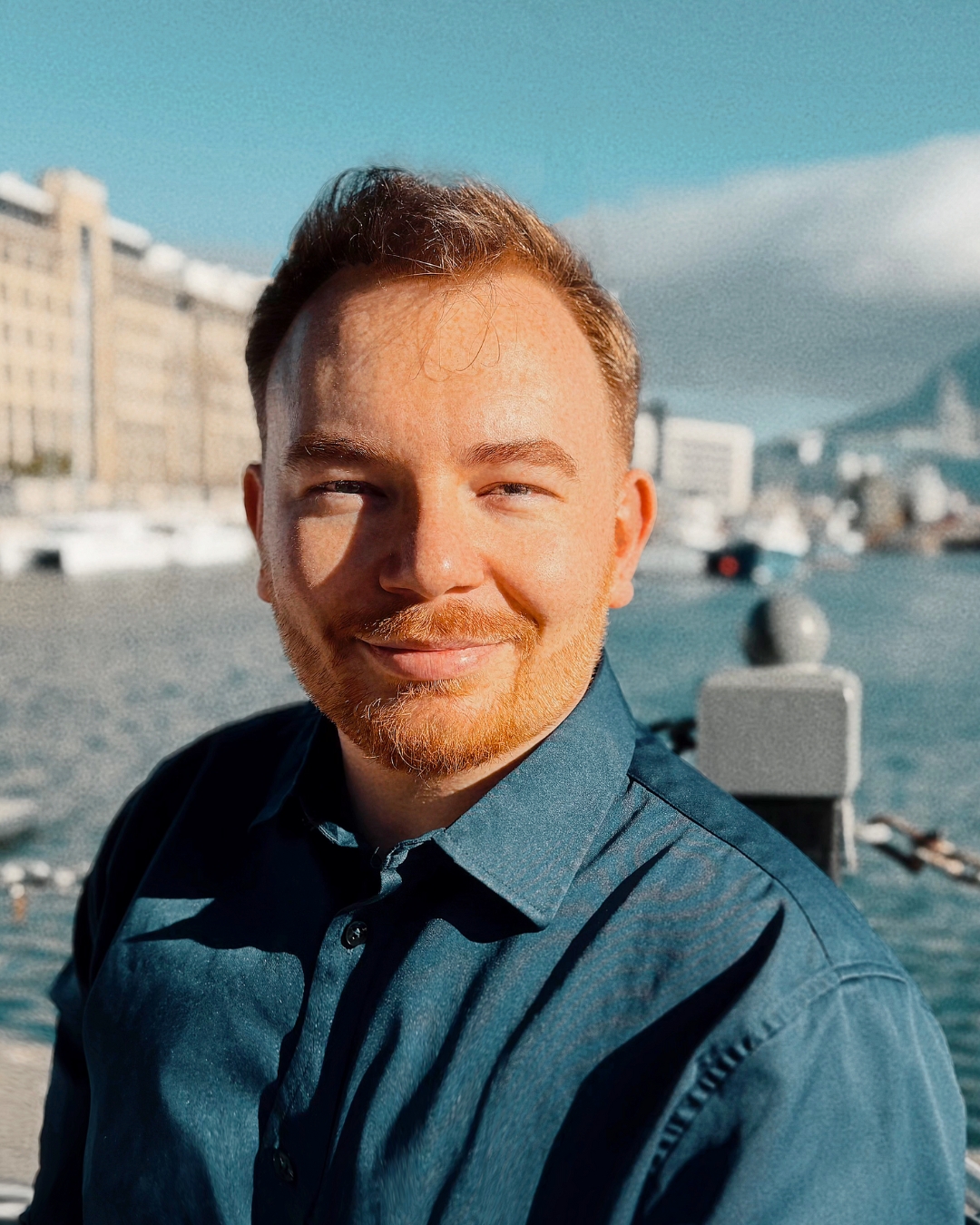
Julien Labarre is a 2024 PhD graduate whose work examines disinformation, populism, and the psychological foundations of illiberalism. Shaped by his upbringing in a conservative region of France, Labarre studies how media, misinformation, and feelings of devaluation shape democratic attitudes. His research introduces the idea of epistemic vulnerability, the weakening of trust in political information that makes it difficult for people to distinguish truth and misinformation. In his paper he highlights how this puts a stress on public spheres, revealing new and deeper challenges democratic societies face. Learn more about how his work bridges political communication and democratic health.
Julien Labarre’s interest in politics began long before he knew political science could be a career. He grew up in a conservative region of France, in a family who often voted for the populist far-right—an environment he often compares to rural America. He remembers watching the televised French presidential debate on May 2, 2007 between the final two candidates. It was the first time a woman had made it to the election’s second round, a moment that left a lasting impression on him. He noted then, even at the age of thirteen, how this election would make history. That experience sparked an early curiosity about politics and representation, later shaping future interests in Hillary Clinton and American politics more broadly.
That curiosity followed Labarre through his education. Before coming to the United States, Labarre studied American Studies in France, combining linguistics, literature, and politics. His academic interests gradually shifted away from historical and literary analysis and toward political science, driven by a growing desire to understand how political attitudes are formed and sustained.
Labarre wrote his master’s thesis on the 2016 Presidential election, focusing on Hillary Clinton’s use of Facebook during the Democratic primaries. Watching American politics unfold from abroad—and then from within the U.S.—he found himself grappling with a question that would define his future research. Following her loss to Donald Trump, he wanted to understand how people voted for someone who routinely made extreme and false claims. Labarre shifted his focus on the deeper conditions that made these politics possible. Labarre began looking for a program in the U.S. that would allow him to study these questions closely. UCSB quickly became his top choice.
At UCSB, Labarre’s work expanded to study disinformation, populism, illiberalism, and extremism, all framed around a central concern: the health of American democracy. His dissertation argues that contemporary democracy faces not only political challenges, but epistemic ones. He introduces the concept of epistemic vulnerability, in which citizens operate with incomplete or distorted information, struggling to identify reliable sources of truth. He often describes himself as walking on two “legs:” political communication, disinformation, and media systems on one side, and behavioral and psychological tendencies on the other.
Labarre’s recent work increasingly focuses on the psychological manifestations of illiberalism. His research explores how feelings of being devalued, disoriented, or unable to make sense of the world push people toward extremist attitudes. He is particularly interested in how perceived social devaluation fuels radicalization.
Now, Labarre works as a postdoctoral researcher in the University of Zurich’s Department of Communication and Media Research. There, he continues to study these dynamics across democratic contexts.