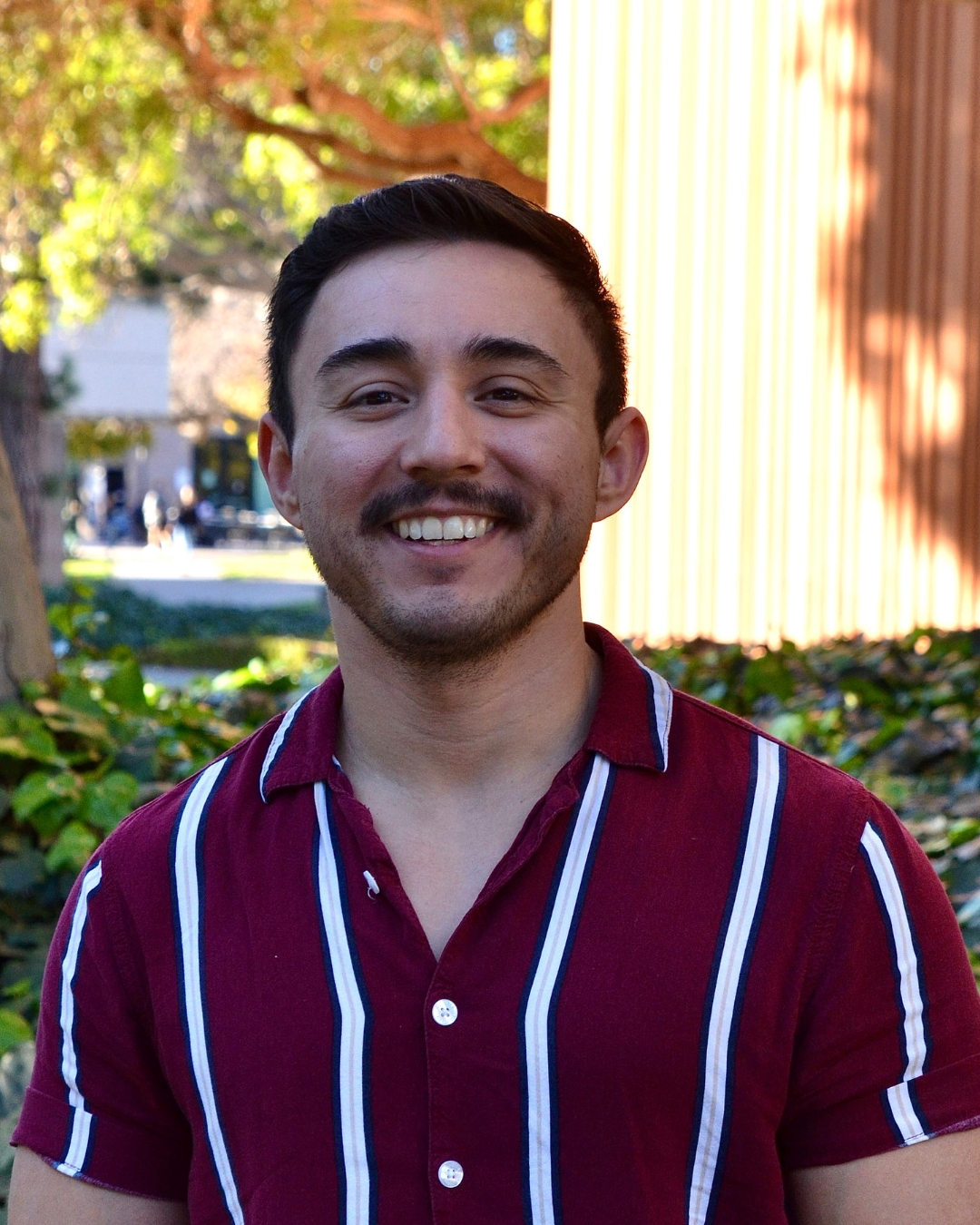
Daniel Cervantes is a PhD candidate in UC Santa Barbara's Department of Political Science whose research examines political communication, conspiracy theories, and elite behavior in digital age. Drawing on experiences in the performing arts, public policy, and political communication, Cervantes studies how Congress members strategically engage with misinformation on social media. Grounded in a deep commitment to democratic accountability, and media literacy, his work explores what elite rhetoric reveals about power, persuasion, and participation in contemporary American politics.
Before Daniel Cervantes ever imagined himself studying politics, his worldview was shaped at home—by his grandmother. An immigrant from Mexico, she treated history not as something studied, but as something lived. She never hesitated to talk about politics. Even as the events of 9/11 unfolded, she sat him down in front of the TV and told him to watch. “Regardless of good or bad,” she said, “this is history.” From her, Cervantes learned that civic moments demanded attention, and that understanding power meant paying attention even when it was uncomfortable.
Those lessons followed him to college, though in a rather unexpected way. Before policy or law, Cervantes was a performer. He joined the Young Americans, a touring performing arts troupe, living and performing across 13 countries. There, he built shows in a matter of days and performed with local communities. The experience was transformative—but not because of his work onstage. What stayed with him were the moments of community, especially in Japan’s Tōhoku region, where he met children still recovering from the tsunami and Fukushima disaster. He remembers watching them dance and laugh, full of joy despite profound loss, and wondering why people back home—himself included—so often searched for things to complain about. The experience left him questioning, how do life’s circumstances shape outlook, belief, and resilience?
That question followed him home as he debated between two careers—performance or law. The bridge between them came through the musical Hamilton. To Cervantes, it crystallized what his grandmother had always taught him — the importance of storytelling. As he moved through his undergraduate years, he learned how storytelling shapes how people understand power, history, and belonging. How art and political speeches alike could empower people. That growing awareness—that stories shape belief, and belief shapes behavior—eventually pushed Cervantes to think more seriously about how power actually functions. Performance had taught him how emotion moves people; travel had shown him how circumstance shapes perspective. Next, he wanted to understand the machinery behind it all.
After graduation, he began a master’s degree in public policy at UC Irvine, specializing in social policy. During the day, he worked as a communications assistant for Congressman Harley Rouda, where he learned firsthand how political narratives are built. The experience demystified politics: he quickly learned how communication wasn’t inspirational by accident—it was strategic. Political messaging was part of a larger machine composed of approvals, filtered through risk, and carefully tailored to constituents. He expanded this understanding of politics working as a field representative in the office of State Senator Lena Gonzalez. He learned how legislation was explained to constituents, how disagreement was managed, and how political decisions translated into real-world outcomes. Cervantes had always been passionate about politics. Now he wanted to dive in more.
When he first joined the UCSB, he was interested in learning more about the presidency– but he rather quickly pivoted his attention to Congress. Today, his research examines how members of Congress engage with conspiracy theories on Twitter/X. By building and analyzing a large dataset, he models factors that predict elected representatives’ engagement with conspiratorial thinking—seniority, ideology, competitiveness, and leadership roles. His goal isn’t to eliminate conspiracy thinking, but to understand how it spreads through elites and platforms, and what that means for democratic accountability in an era when traditional gatekeepers no longer exist.